




All products featured are independently selected by Izzie & Drew editors. When you buy through links on our site, we may earn a commission.
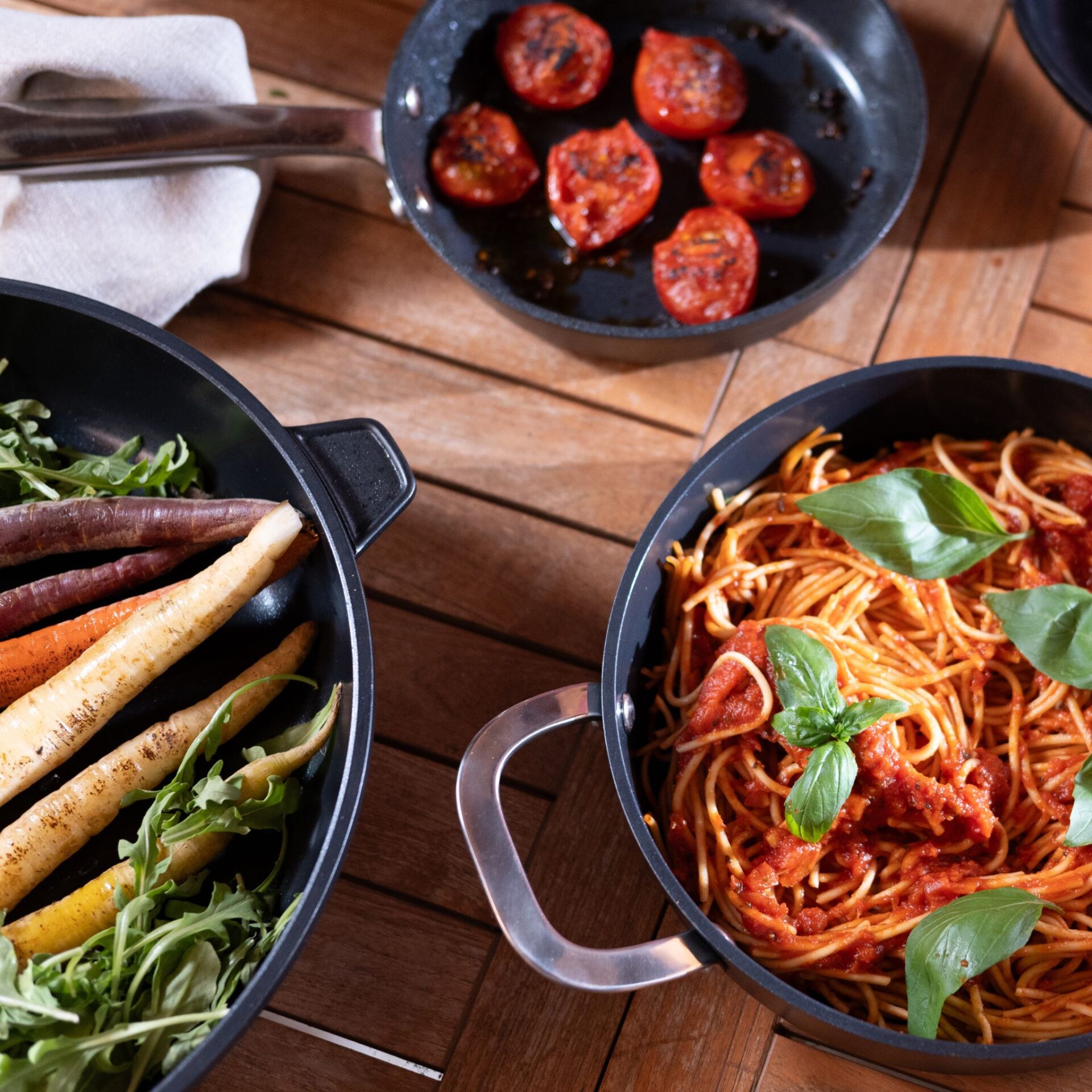
The candlelight beautifully softens the edges of the warm, weathered timber table. Your guests are laughing, glasses of a velvety, cherry-hued Chianti Classico catching the low amber glow of the room. At the center of the gathering, a rich, slow-simmered pomodoro pasta and vibrant, fire-roasted root vegetables wait to be shared.
This is the peak of the evening; the moment where hospitality should feel like second nature. Yet, beneath the easy, elegant smiles, a familiar, quiet friction frequently lingers in the modern estate. To your left sits a conventional stainless steel pan, beautiful but notoriously temperamental; one misstep in temperature and your food can stick to the metal. To your right, an ordinary nonstick pan with a synthetic coating that lacks the aesthetic and structural longevity you expect from investment pieces. It is a design paradox that has challenged elite home kitchens for decades.
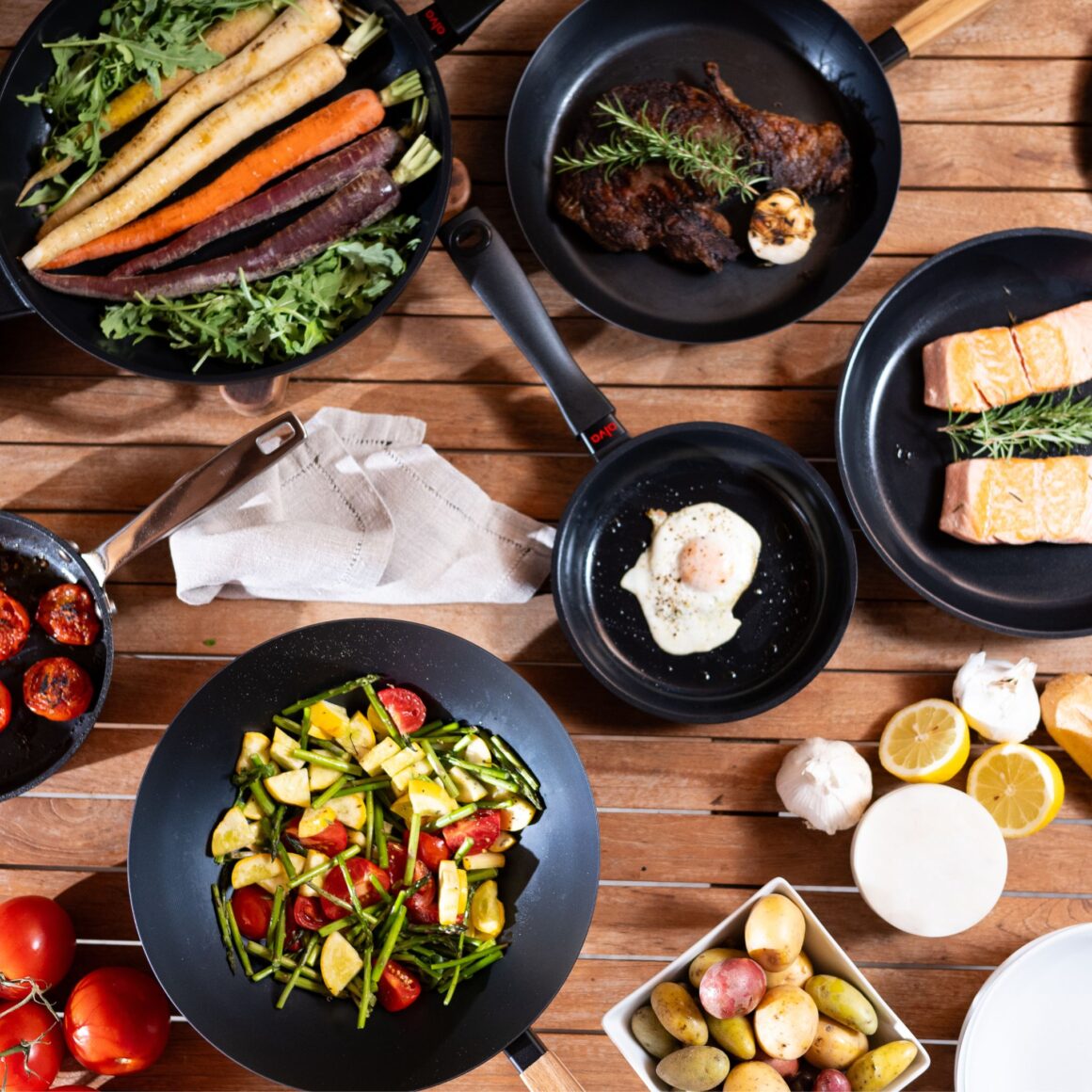
Why must we choose between the theatrical precision of professional culinary tools and the effortless ease of modern, curated living?
The Curation of the Modern Hearth
The objects we bring into our homes dictate our daily rituals. When we step up to the range, the bridge between historic heritage and modern engineering becomes entirely tactile. Exceptional culinary tools don’t just hold heat; they help transform raw ingredients into a streamlined, high-end sensory experience.
For decades, the standard for professional-grade cookware required a frustrating compromise. If you wanted the lightning-fast conductivity of premium metals, you often had to accept grueling, unglamorous cleanup routines. If you opted for the effortless convenience of traditional nonstick surfaces, you were frequently forced to accept standard synthetic coatings that wear down quickly and require delicate care.
True modern refinement rejects these trade-offs, leaning instead on rigorous engineering and transparent material choices to build high-performance cooking tools that are designed to endure as long as the architecture around them.
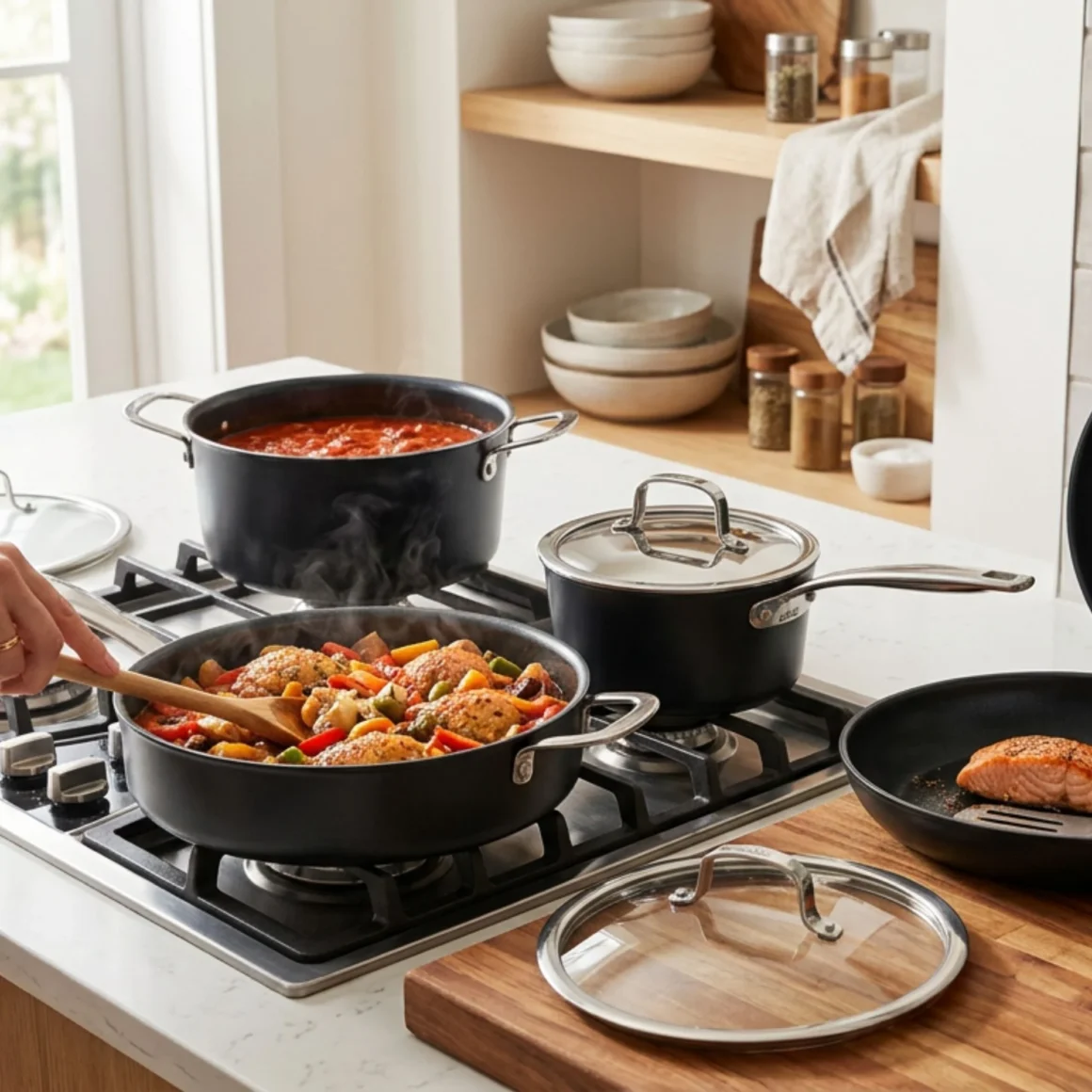
Enter Alva Cookware. Born in Belgium and refined over generations, this pioneering brand has carved out a unique space in the premium cookware market by returning to fundamental design principles. While traditional commercial kitchens often favor heavy, industrial blocks of steel, Alva represents a different kind of Belgian engineering—one focused on the fluid, minimalist serenity of the modern estate. Instead of chasing fleeting kitchen trends, Alva crafts its collections out of multi-layered stainless steels, pre-seasoned blue carbon steel, and pristine ceramic nonstick surfaces. By marrying thoughtful manufacturing habits with meticulous material layouts, Alva elevates the daily act of cooking into a seamless, high-precision art.
The Hostess’s Secret: Born in Oostrozebeke
The answer to this culinary riddle does not lie in a trend-chasing boutique, but in a quiet corner of West Flanders.
In 1949, amidst the post-war scarcity of Oostrozebeke, Belgium, a visionary named Albert Vandaele looked at salvaged materials and saw a different future. He didn’t see scrap; he saw the raw materials for a new kind of household vessel. Albert’s philosophy was simple, born of a time when things were built to last: make nothing disposable.
To achieve this enduring quality, Alva engineered a brilliant 5-ply anatomy of heat. The exterior of the cookware is crafted from lustrous stainless steel, which protects a rapid-response aluminum core split into three distinct layers for exceptional conductivity. This core is then paired with an interior stainless steel cooking surface, ensuring excellent thermal distribution throughout the entire vessel.
That resource-conscious origin story laid the foundation for a three-generation family legacy centered on structural integrity. Today, that eco-conscious DNA translates into a manufacturing process that relies heavily on recycled aluminum and certified sourcing. Their production facility is partially powered by solar energy, utilizes closed-loop water recycling systems, and features a specialized curing phase designed to lower carbon dioxide emissions compared to traditional methods.
1. The Maestro Mentality: 5-Ply Performance and Ceramic Safety
The clock reads 9:00 AM. Sunlight pours through the Crittall doors, and the house is quiet save for the hum of the espresso machine. Breakfast after a long dinner party should be a slow, restorative ritual, not a battle with burnt butter. This is where the Maestro Ceramic Nonstick Frying Pan takes the stage.
For home chefs who refuse to choose between flawless searing capability and conscious material safety, this flagship collection serves as an absolute masterclass in balanced thermal dynamics.
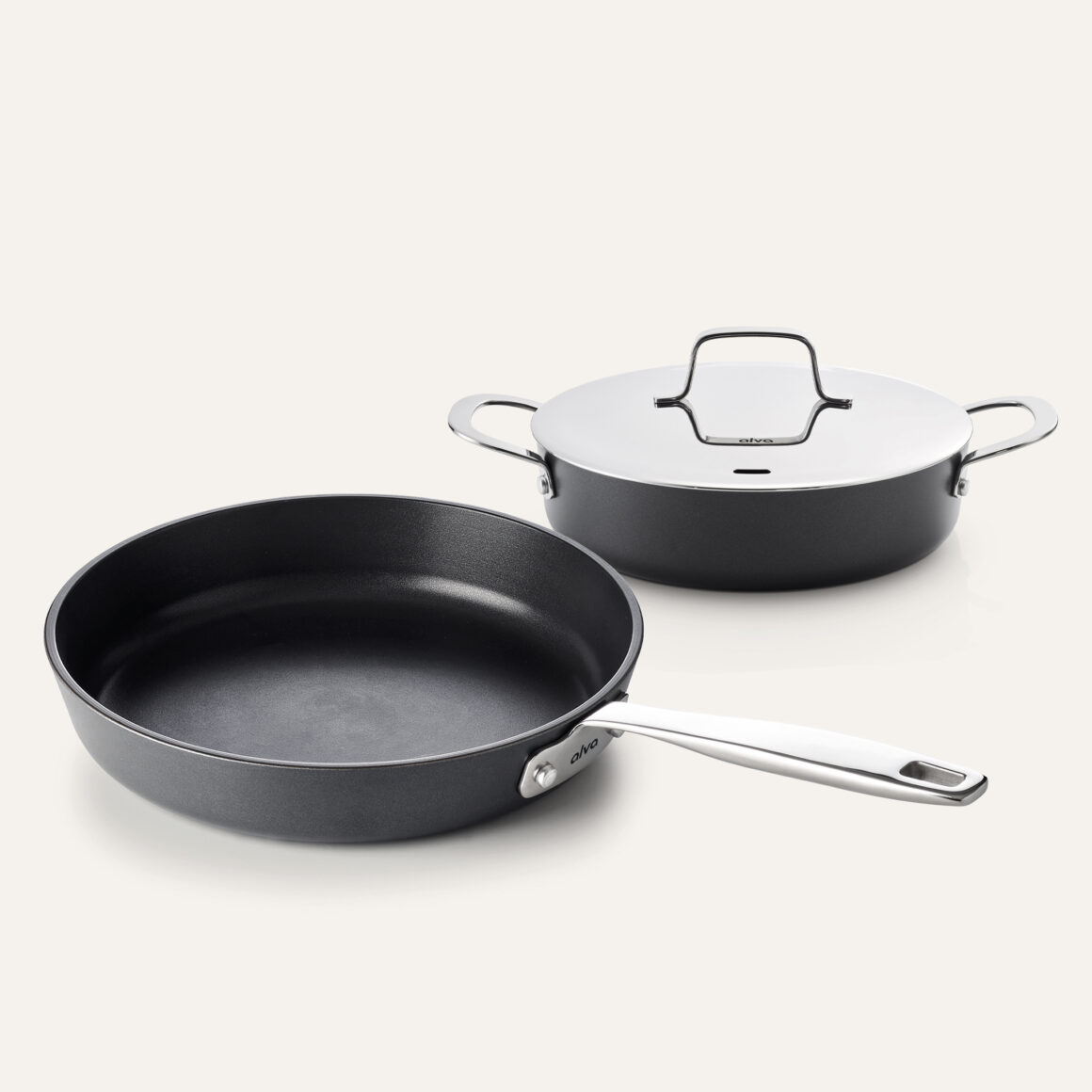
At the peak of their lineup sits the Maestro series, featuring a robust 5-ply stainless steel architecture. By sandwiching highly responsive aluminum cores between layers of premium stainless steel, Alva ensures rapid, edge-to-edge heat distribution that entirely eliminates the frustrating hot spots that burn delicate sauces.
Furthermore, Alva’s ceramic nonstick surface utilizes a mineral-based coating that is advertised as free of PFAS, PTFE, PFOA, lead, and cadmium. As you drop an ingredient into the pan, it glides effortlessly across the surface, delivering high-end thermal performance with a cleanup that requires nothing more than a gentle wipe with a warm, damp cloth.
The collection is anchored by pieces like the Maestro 5-Ply Stainless Stock Pot—a professional-grade anchor for batch cooking and slow-simmered broths, featuring a lifetime warranty, a weighted stainless lid with built-in steam ventilation holes, and complete induction compatibility. For everyday versatility, the Maestro Ceramic Nonstick Sauté Pan acts as a heavy-bottomed workhorse that transitions seamlessly from an induction cooktop into a 200°C oven, wrapped in a smooth ceramic glaze.
Discover the Maestro Collection
2. The Midday Sear: The Forest Carbon Steel Heirloom
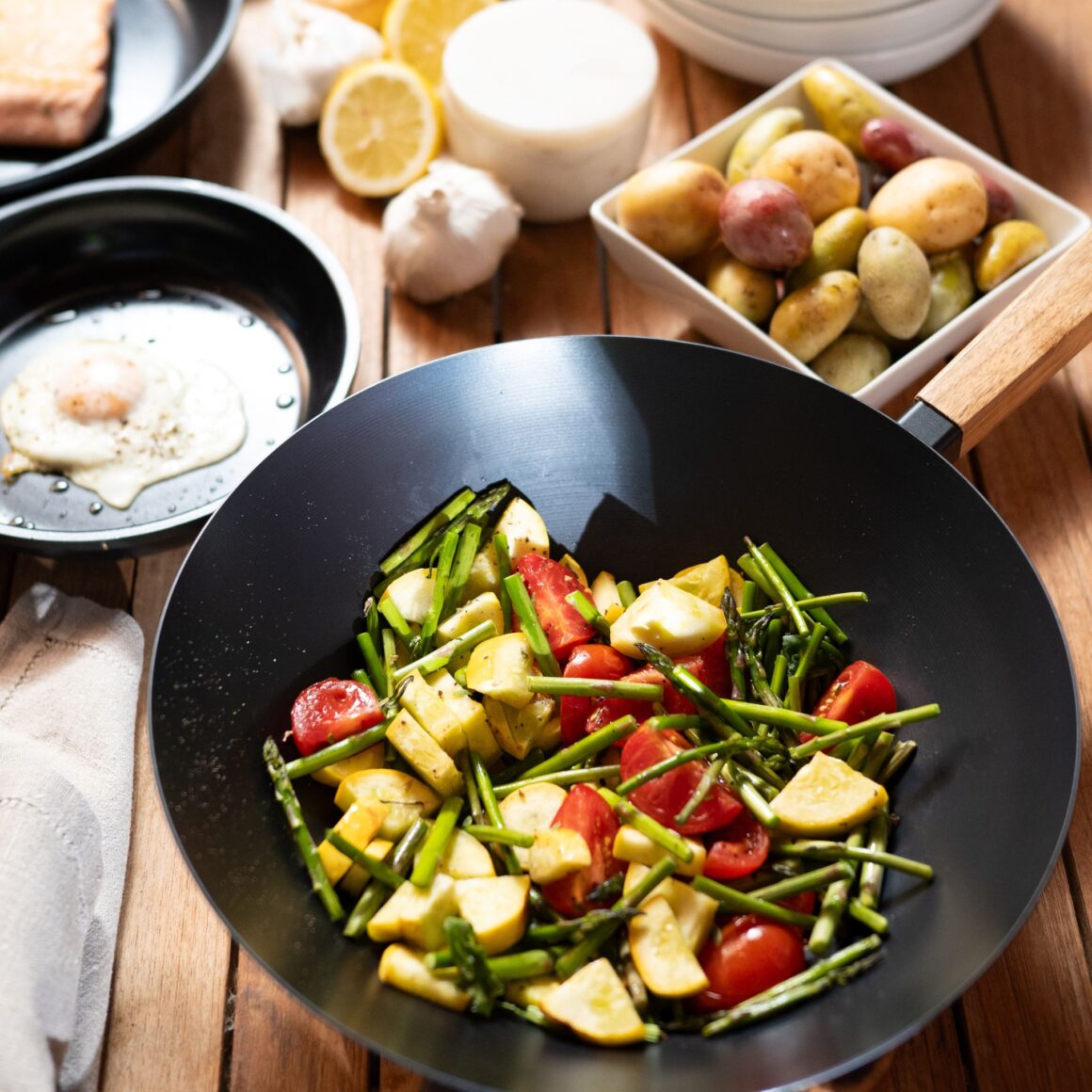
For those moments that require raw, unadulterated heat—a perfectly crusted ribeye for a casual Saturday lunch, or a blistered, smoky stir-fry—one must look to the Forest Carbon Steel Frying Pan.
If cast iron is the stubborn, heavy grandfather of the kitchen, carbon steel is its agile, athletic cousin. Beloved by high-end kitchens for its ability to change temperature almost instantly, Alva’s Forest pan is forged with zero synthetic coatings. It arrives pre-seasoned and ready for the fire.
The life of a Forest pan follows a beautiful, evolving patina timeline. Out of the box, the metal displays a pristine blue steel finish. Within your first dozen high-heat searings, it begins to mature into a deepening bronze hue as it absorbs cooking fats. Eventually, it achieves a signature charcoal black finish, creating a permanent, lifetime natural shield. With every splash of oil and every high-heat sear, the metal grows more naturally smooth—a beautifully weighted, indigo-hued tool designed to be handed down to the next generation.
Discover the Forest Collection
3. The Sunday Ritual: The Nori Dutch Oven
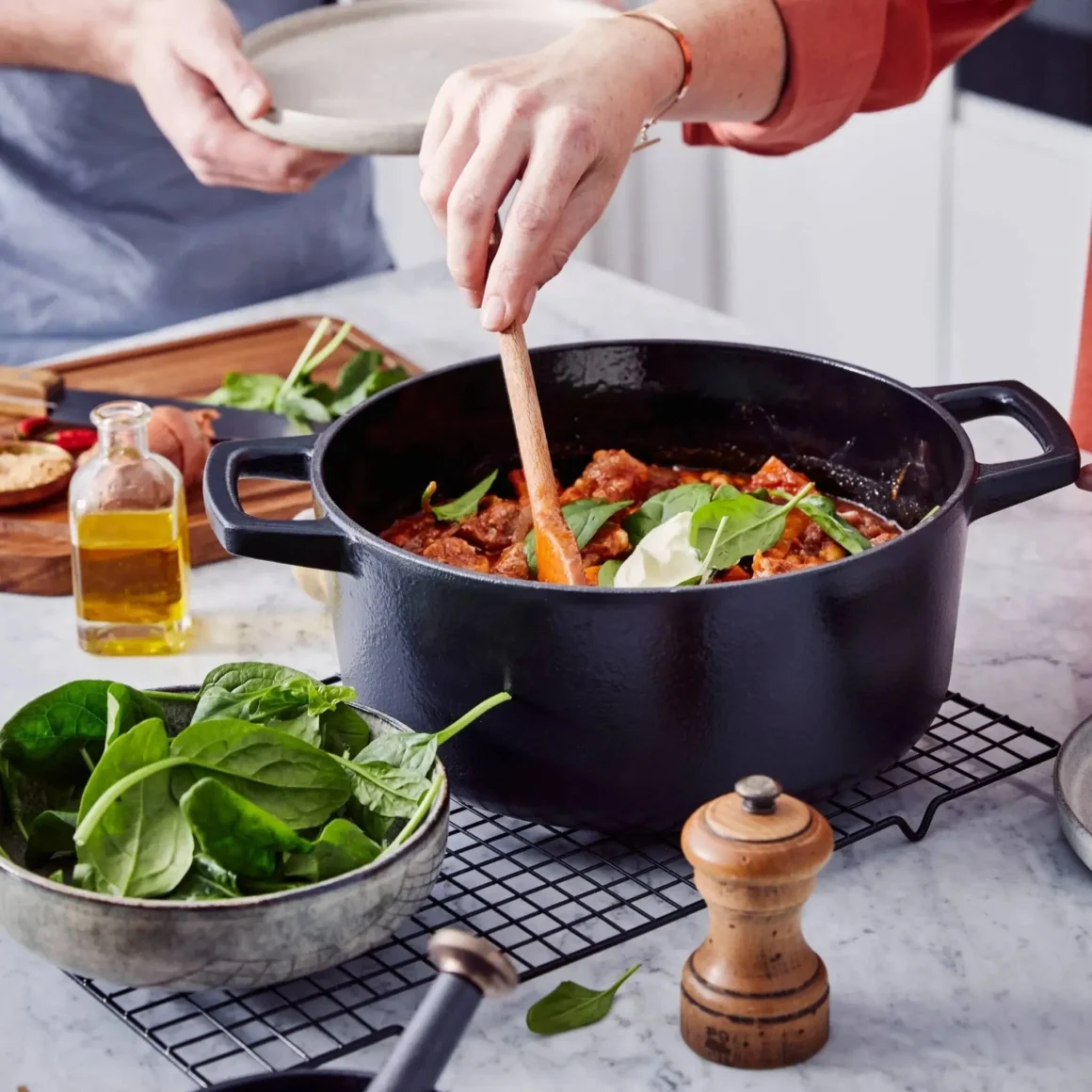
There is a distinct romance to Sunday afternoons in the autumn. The scent of rosemary and slow-braising short ribs filling the air while a rainstorm taps against the window. For these long, slow-cooked masterpieces, the Nori Enameled Cast Iron Dutch Oven is the undisputed champion.
Coated in a flawless, glossy enamel that requires no seasoning, this 5-quart powerhouse is non-reactive to acidic ingredients like rich, red-wine reductions. Its thick cast-iron walls radiate a gentle, unwavering heat, while the heavy, self-basting lid acts as a moisture lock—dripping flavorful condensation back onto your roast so it never dries out.
But its true genius lies in its presentation. When the timer dings, the Nori moves seamlessly from the oven range straight to the center of a linen-draped table. It is a piece of functional sculpture, striking enough to command the room.
4. The Art of Order: The Neat Nesting Set
True refinement is not just about what we display; it is about the peace of mind hidden behind closed doors. There is nothing that ruins the sensory high of a beautiful meal quite like opening custom cabinetry to a clattering, chaotic avalanche of mismatched pots and sliding lids.
Enter the Neat 5-Piece Nesting Cookware Set, a collection so brilliant in its architectural efficiency it has earned widespread critical acclaim, including a coveted spot on Oprah’s Favorite Things.
The Neat collection elegantly pairs brilliant design solutions with exceptional culinary results. Its flat-stacking profile saves up to 50% of your cabinet space, nesting beautifully into a single, sculptural tower. For flawless execution at the stove, integrated pouring spouts allow for drip-free pouring of stocks and sauces directly from the rim, while the glass lids feature built-in strainers that render bulky, separate colanders completely obsolete. Beneath it all, a premium, PFAS-free ceramic interior delivers elite heat conductivity paired with an effortless food release.
Beyond simple storage efficiency, the Neat collection is packed with thoughtful, ergonomic mechanics. Lids are engineered with these built-in strainers and matching pour spouts on the pan rims so you can drain hot pasta water or pour off rendered fats directly from the vessel without fetching a separate tool. It is a masterclass in space-saving design, proving that you do not need to sacrifice culinary capability to maintain the minimalist serenity of your home.
Bridging Style and Substance
Ultimately, investing in your kitchen tools is a quiet nod to intentional living. A pan shouldn’t be a disposable commodity that you toss away after a year of use; it should be a reliable, beautifully weighted companion that grows more familiar with every sear, sauté, and simmer. By pairing a commitment to verified material safety with robust European manufacturing, Alva proves that the tools we use to nourish ourselves can be as sustainable as they are precise.
When your cookware is engineered to distribute heat evenly and clean up effortlessly, the friction of home cooking completely melts away. You find yourself focusing less on the mechanics of cleanup and more on the texture of a crisp sear, the aroma of a slow reduction, and the joy of a shared table.
With our kitchens beautifully optimized for culinary creation, our editorial lens shifts from the culinary hearth to the fluid, poetic realm of heritage wardrobe curation. Join us on our next adventure as we cross the English Channel to explore Lily and Lionel, the coveted British fashion house renowned for its romantic, hand-drawn prints, nostalgic silhouettes, and refined silks. We will delve into how their ethereal, heirloom-worthy dresses seamlessly bridge British textile legacy with contemporary Bohemian elegance.
Until next time on Noted, by Izzie & Drew.